In my last column, I dived into the horror content I consumed in my childhood. While writing, I was reminded of my huge Creepypasta phase. I grew up watching a lot of Youtube, so I was bound to stumble across it.
Creepypastas were user-generated horror stories, images, or audios that were shared across the internet–usually on specific websites or forums created for them. These stories became the modern equivalent to campfire stories. It was easy to share them around anonymously; hence the term originating from “copy pasta” because people would copy and paste them.
Before the term “Creepypasta” existed, there was internet chainmail horror. In the late 1990s and early 2000s, these were spread via email and early social media. For example, the Carmen Winstead legend was when you’d be threatened with a ghost appearance if you didn’t forward the email to another person.
(Horror chainmail is definitely still a thing, though, especially on Snapchat. It’s more of a thing that younger kids share, but at least once a year, someone will still send me some stupid crap like, “Send this message to ten friends, or a clown will appear in your room at 3:00 a.m.)
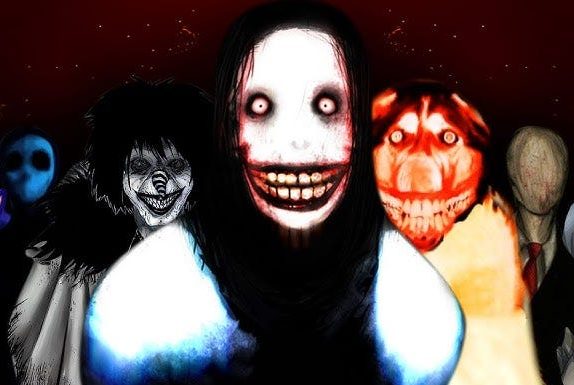
The specific term “Creepypasta” didn’t appear until around 2006, but it surged in popularity between 2010-2014. There were community-driven platforms like Creepypasta Wiki, and the Youtube and gaming culture pushed out a lot of content. Characters such as Slenderman and Jeff the Killer were trending and became cultural icons.
(Check out my column Marble Hornets: The Youtube Series That Defined Slenderman for more background details on Slenderman.)
The niche genre exploded into the mainstream internet and received high-profile coverage from places like The New York Times. Fans of Creepypasta, mostly edgy teens and young adults, would create their own horror stories and fan art. There were a lot of popular Creepypasta characters created by fan-made OCs (a character made from scratch). My favorite character was one of these, but the creator has asked that people detach him from the community, so if you know, you know.
As the community grew, the fandom became toxic. Some fans would romanticize killers, and there were younger fans who struggled to separate fiction from reality. Most stories focused on graphic violence and mental health. There was even real-world violence: the most infamous example being the 2014 “Slenderman Stabbing,” where two preteens attempted to kill their friend to impress the fictional character.
In 2015, Creepypasta faded from mainstream popularity. Characters weren’t seen as “underground” anymore, and a lot of poor-quality stories were being produced. The genre definitely isn’t unpopular, but it will probably never be as big of a thing as it was in the 2010s.
I’d love to write another column on Creepypasta, especially one focusing on a specific character.
Leave a comment below if you have any suggestions!